An active water leak is one where water is still escaping from a pipe, fitting, appliance or plumbing fixture at the time of inspection. The most reliable way to distinguish it from old leak damage is to isolate possible water sources, observe whether conditions change, and use targeted tests rather than relying on staining alone.
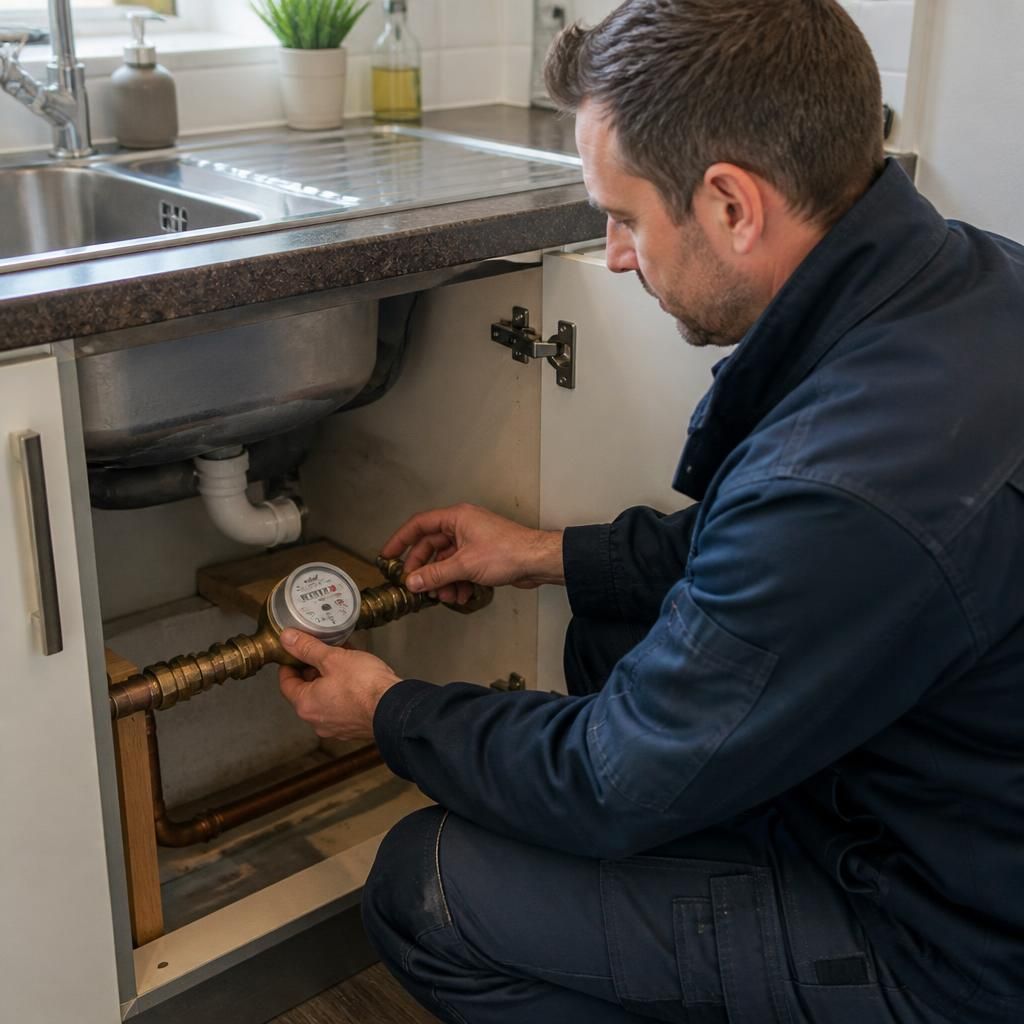
Start by checking whether the property is using water. Close every tap and make sure appliances such as washing machines and dishwashers are not running. Do not flush toilets during the check. Once all known outlets are inactive, look at the water meter. A changing reading or a flow indicator that continues to move suggests water is passing through the system when it should be still. If the meter remains stationary, this does not completely rule out a leak: a concealed leak may be intermittent, or it may be on a supply that is not being measured in the way you expect.
Use the internal stop tap to narrow down the source. If it is safe to do so, turn off the property's internal water supply and observe the suspected area. Moisture that continues to appear may be coming from stored water in pipework, a central heating circuit, a tank, a neighbouring property or an external source. Moisture that stops after isolation may point towards the mains-fed plumbing inside the property, although further testing is needed to identify the exact pipe or fitting.
Individual fixtures can then be checked separately. A toilet with a faulty inlet valve or flush mechanism may allow water to pass quietly into the pan. A simple dye test can help identify this: coloured dye placed in the cistern should not appear in the pan without flushing. Water around the base of a toilet, beneath a sink or beside an appliance should also be assessed after the fixture has been used and then left untouched. Fresh moisture following use is more suggestive of a leak at that connection than a mark that remains unchanged.
Intermittent leaks require a different approach. Some leaks occur only when a pipe is under pressure, when hot water is circulating, when a heating system is operating or when an upstairs bathroom is being used. A dry surface during a brief inspection does not prove that the plumbing is sound. Recording when moisture appears, which fixtures were used beforehand, and whether the problem follows rainfall or heating use can help separate an active plumbing leak from condensation or water entering from outside.
Not all dampness comes from a pressurised water pipe. A leaking waste pipe may release water only while a sink, bath, shower or appliance is draining. A heating leak may be associated with repeated pressure loss or moisture around radiators, valves and boiler pipework. Rainwater penetration, condensation and leaks from another property can create similar marks, so the location and timing of the moisture are important. Tracing the route of water is often more useful than assuming the nearest stain identifies the source.
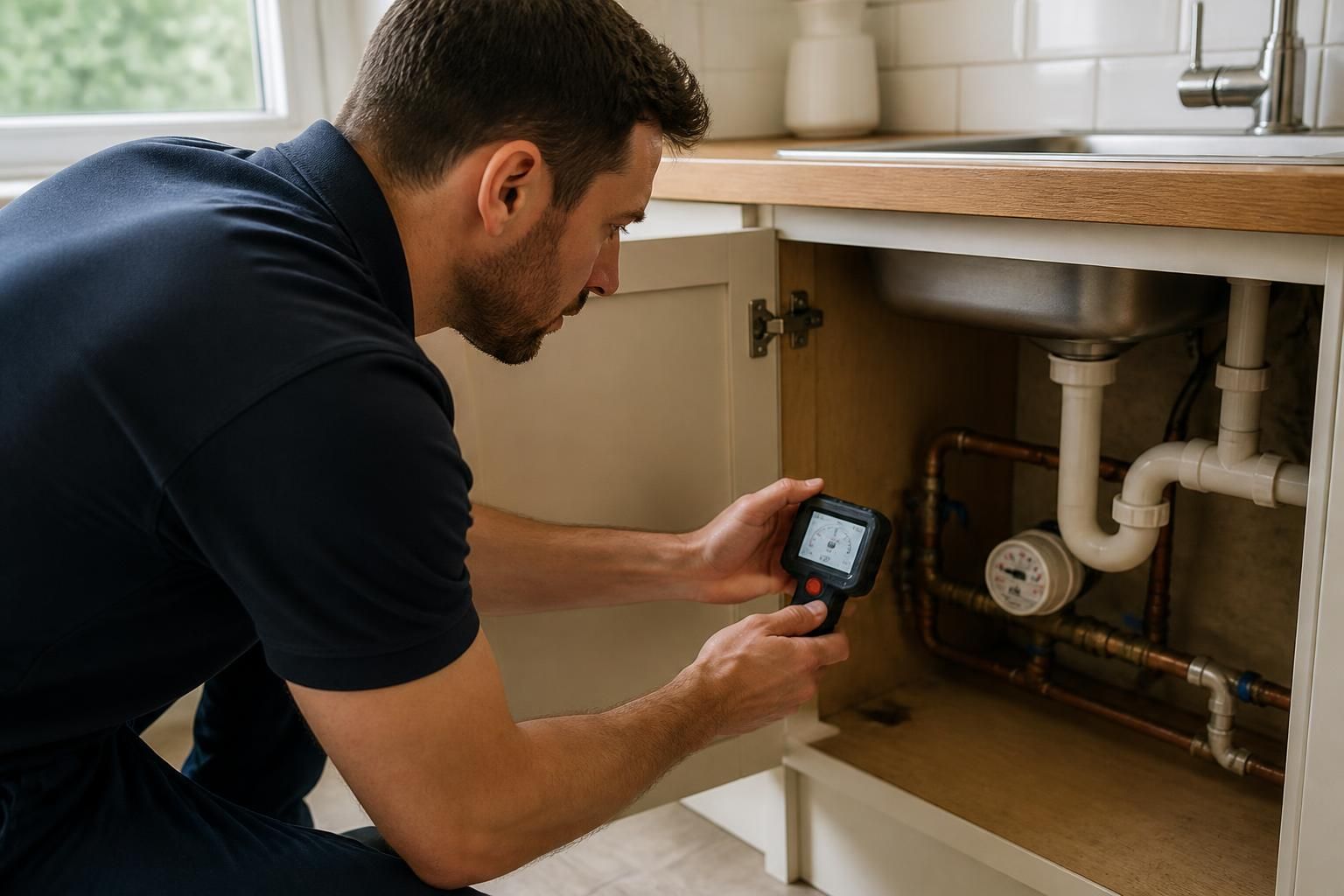
Fresh changes in building materials can provide further evidence. A moisture meter can compare readings around the suspected area, while thermal imaging may reveal temperature differences linked to concealed pipework or evaporating moisture. Acoustic equipment can help locate the sound of water escaping from pressurised pipes. These methods indicate where investigation should be concentrated, but they need to be interpreted alongside the plumbing layout and the property's construction. They do not by themselves prove that a particular pipe has failed.
There are several reasons why old damage can look like an active leak. Plaster, timber, insulation and flooring can retain water after the original fault has been repaired. Salts may remain on masonry and produce recurring-looking marks, while trapped moisture can take time to dry. A historic stain that is stable, dry to the touch and not associated with a current meter movement may be residual damage. Conversely, a small active leak can be difficult to see because water may travel along a joist, behind a wall or beneath flooring before becoming visible elsewhere.
Take sensible precautions while checking. Avoid removing flooring, cutting into walls or disturbing electrical fittings to search for a leak. If water is close to sockets, wiring or electrical equipment, keep clear of the area and arrange an appropriate safety assessment. Where a leak is clearly continuing, isolating the water supply can limit further damage, provided the stop tap is accessible and operating it does not create a safety risk. Heating systems and sealed circuits should not be opened or dismantled without suitable knowledge.
A professional water leak inspection is advisable when the source cannot be identified, the leak is concealed, moisture keeps returning, or the suspected fault involves heating pipework, flooring or structural areas. The inspection may combine visual checks, pressure testing, meter observation, acoustic methods, thermal imaging and moisture readings. The aim is to establish whether water is escaping now, determine which supply or system is involved, and locate the fault as accurately as possible before repair work begins.