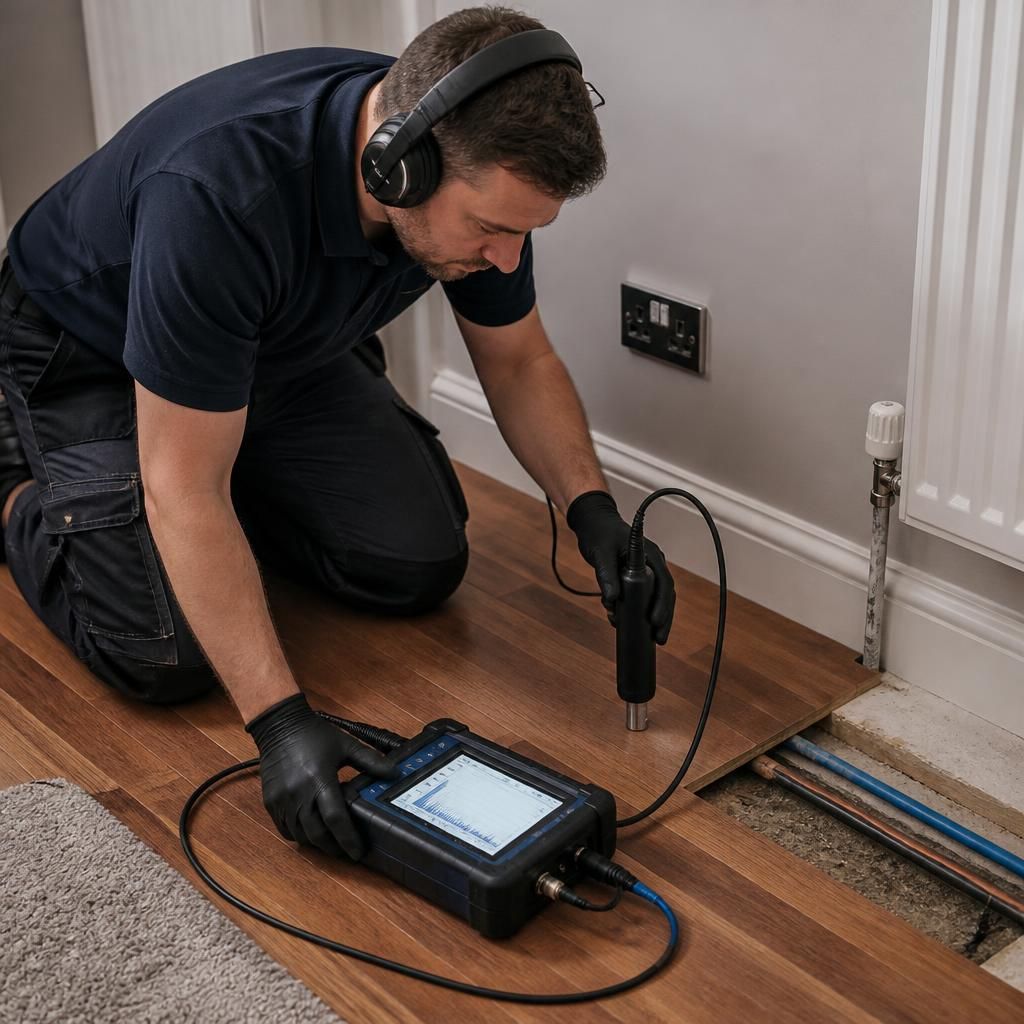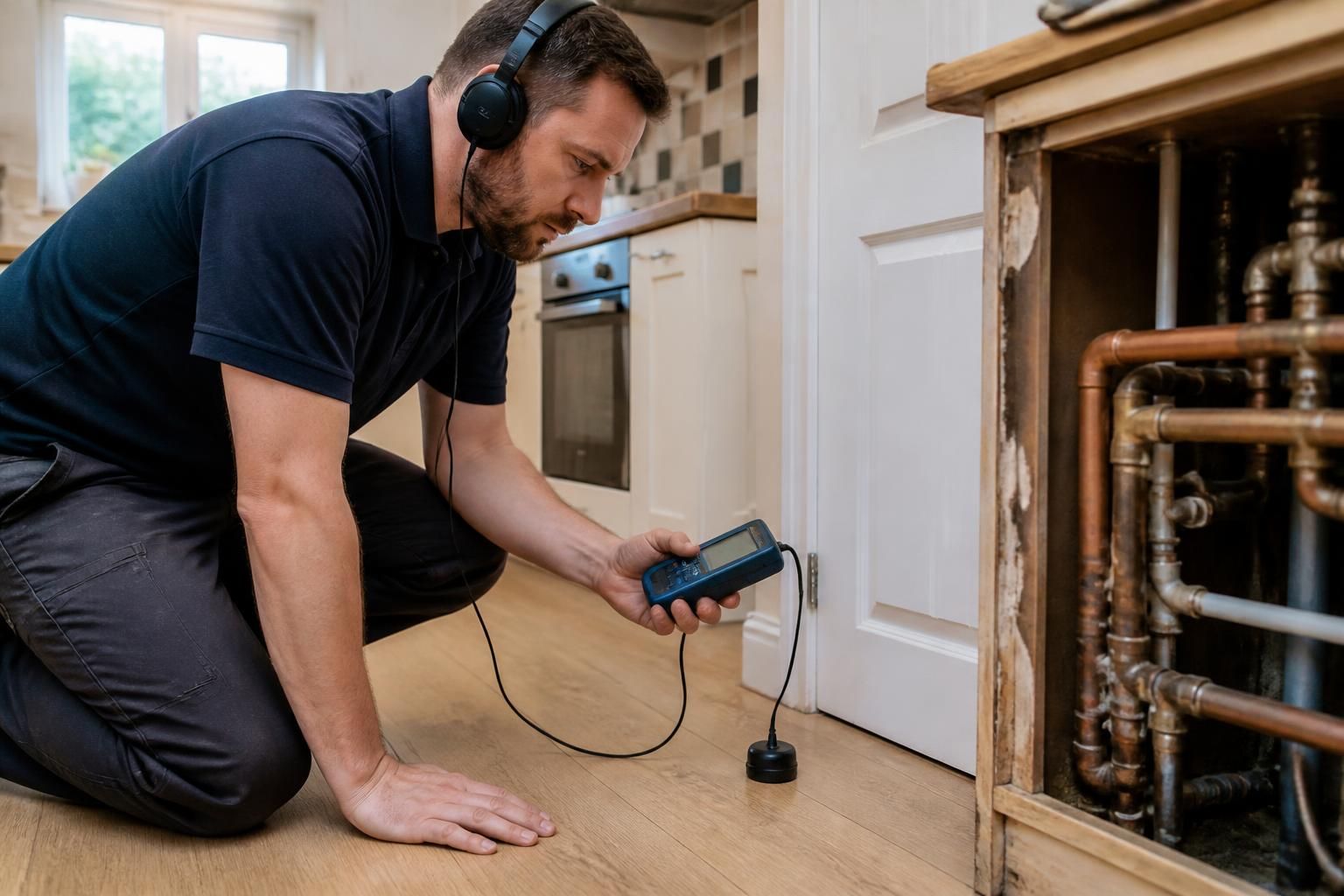
The final water leak detection cost usually reflects the diagnostic work itself, the scope of the inspection and any separate services requested after the source has been identified. A straightforward inspection may involve less work than an investigation covering several rooms, multiple plumbing systems or evidence of ongoing water damage.
- Size and layout of the property: A larger property or one with several bathrooms, kitchens, utility areas or extensions may require more checks than a compact home. The number of areas showing symptoms can also affect the inspection scope.
- Type of plumbing system: The pipework involved can influence the testing process. A supply pipe, central-heating circuit, tank-fed system and drainage connection may each require different checks and equipment.
- Amount of investigation required: An isolated sign such as a damp patch may need a narrower assessment, while unexplained moisture, falling pressure or repeated damage may require several tests to compare possible sources. More diagnostic stages generally mean more time and labour.
- Non-invasive or intrusive investigation: Many inspections begin with methods intended to limit disruption. If the evidence cannot be confirmed without lifting flooring, opening a section of wall or exposing pipework, additional work may be needed. Any intrusive investigation should be explained and agreed before it is undertaken.
- Specialist reporting: A basic verbal explanation and a detailed written report are different requirements. A report prepared for a landlord, tenant, insurer or contractor may need photographs, test findings, affected areas and recommendations, which can add to the overall fee.
- Repair requirements: Finding a leak and repairing it are separate stages. The repair price may depend on the failed component, replacement materials, pipe access and the work needed to test the system afterwards. Replacing damaged flooring, plaster or decoration may also be separate from the plumbing work.
- Follow-up testing: After a repair, further checks may be advisable to confirm that the pipework is holding pressure and that moisture is no longer spreading. Where this is required, it should appear as a clearly identified part of the quotation or invoice.
When comparing prices, check whether the quoted amount includes the initial assessment, testing equipment, written findings, VAT where applicable, and any follow-up visit. Also ask whether repair work, materials, opening-up and making good are excluded. A low initial price may not represent the full cost if important stages are charged separately.
Useful information to provide before an inspection includes when the problem was first noticed, whether water use affects it, any changes in boiler or system pressure, visible damp areas and previous repair work. Accurate details can help the plumber plan the appropriate investigation rather than allowing the scope to remain unnecessarily broad.
For residential customers, a written quotation should separate detection, repair and reinstatement costs wherever possible. Ideal Plumbing Services provides water leak detection and plumbing repairs for homeowners, landlords and tenants, with clear pricing and no hidden charges. The appropriate investigation can then be selected according to the evidence available, without treating every suspected leak as the same type of job.