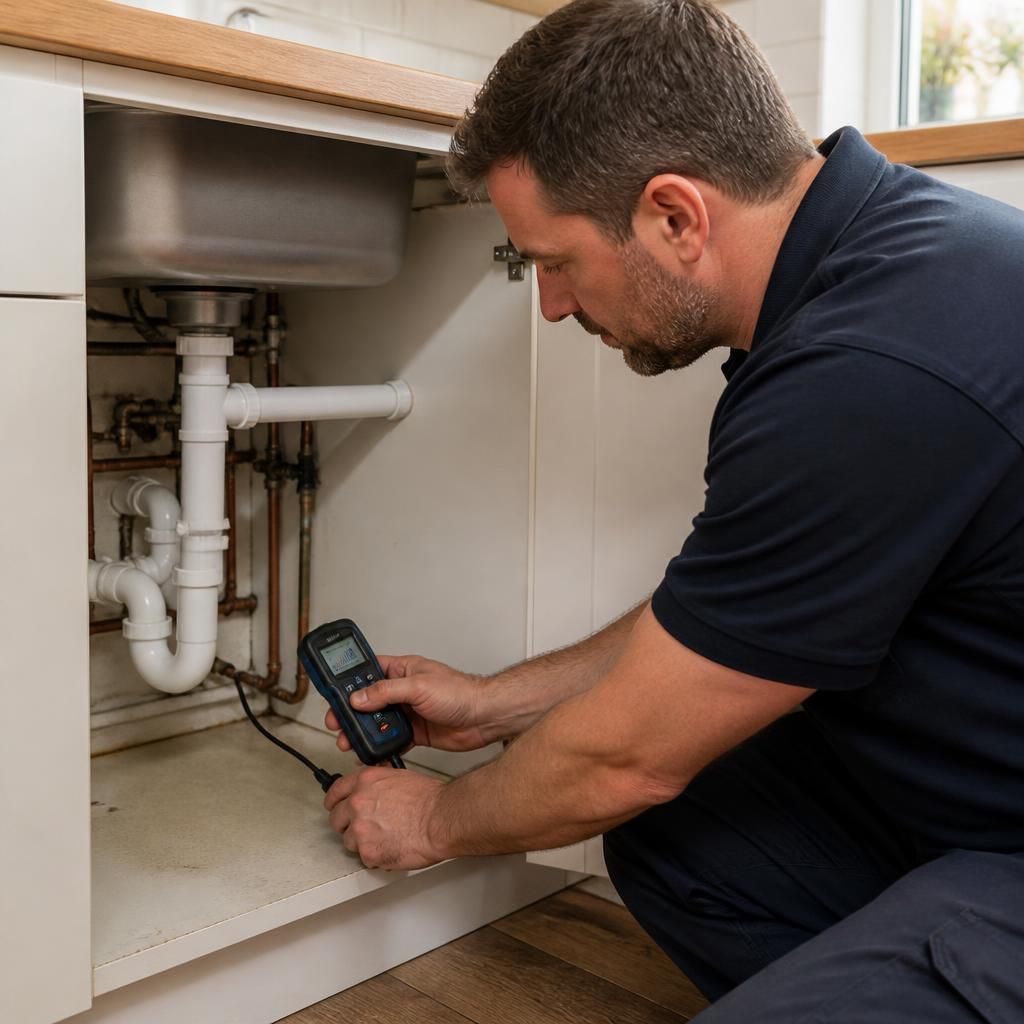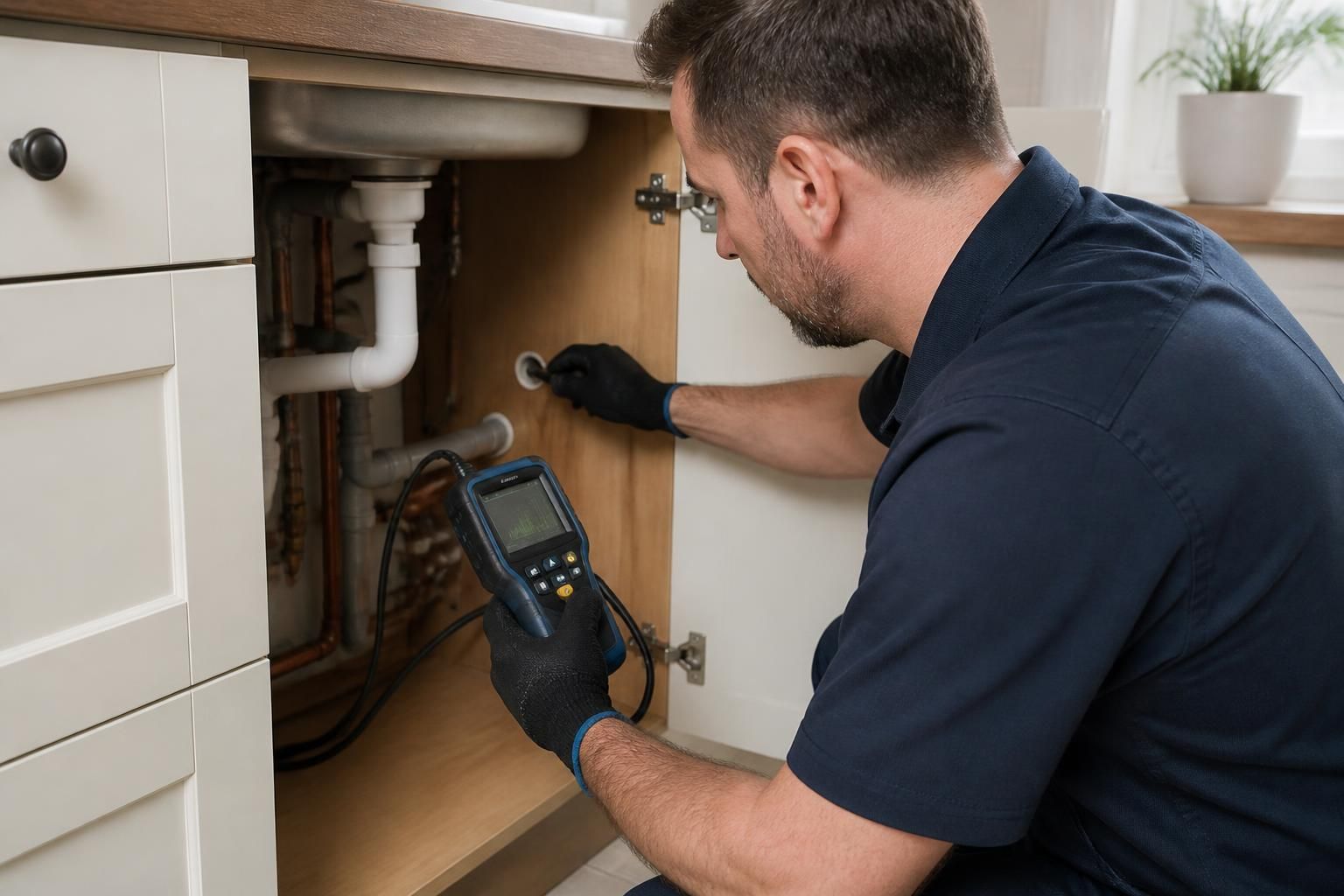
Domestic water leak detection is usually a controlled inspection rather than a destructive investigation. The level of disruption depends mainly on the leak’s location, whether pipework is accessible, and whether the water is escaping from a supply pipe, heating system, appliance connection or drainage fitting.
A typical inspection may involve:
- Discussing visible symptoms, such as damp patches, staining, mould, changes in water pressure or an unexplained increase in water use.
- Checking accessible pipework, valves, taps, toilets, radiators, appliances and storage areas.
- Using suitable diagnostic equipment to assess moisture, sound, pressure or temperature changes where appropriate.
- Comparing readings and observations to narrow down the likely source rather than opening multiple areas without evidence.
These checks can often be carried out with limited interference to everyday household areas. Furniture or stored items may need to be moved to reach inspection points, and cupboards beneath sinks or around boilers may need to be emptied. Keeping access routes clear and removing valuables from the immediate work area can make the inspection more straightforward.
Some parts of the process may temporarily affect normal use of the property. For example, a water supply may need to be isolated while pipework is assessed, or a heating system may need to be switched off during checks. The plumber should explain what needs to be isolated and why, particularly where the property has vulnerable occupants, pets or appliances that depend on a water supply.
Concealed leaks require more careful consideration. If evidence points to a pipe behind a wall, beneath flooring or below another fixed surface, limited opening-up may be needed to confirm the condition of the pipe or reach it for repair. Detection itself does not automatically mean that walls or floors will be removed. Where access is necessary, the affected area and the reason for it should be discussed before work proceeds.
The location of the leak also affects the potential disturbance:
- Visible or accessible leaks: These may be assessed around exposed pipework, sanitaryware, taps, valves or appliances with little interruption.
- Leaks beneath floors: Access may involve lifting a small section of flooring or inspecting from an accessible void, depending on the construction.
- Leaks inside walls or ceilings: A small inspection opening may be considered where other evidence indicates that this is necessary.
- Intermittent leaks: Additional observation or repeated checks may be needed if the leak only occurs when a fitting, appliance or heating circuit is in use.
There can also be indirect disruption if water has already damaged plaster, flooring, cupboards or furnishings. Drying, cleaning and making good those materials are separate from locating the leak. A detection visit may establish the source without completing all remedial building work, so it is sensible to ask which tasks are included before any repair or opening-up begins.
To reduce avoidable disturbance, record when dampness or dripping occurs, avoid covering affected areas, and do not permanently repair or redecorate suspicious marks before they have been assessed. If water is near electrical equipment, isolate the supply only if it is safe to do so and seek appropriate professional help. For rented homes, tenants should also inform the landlord or managing agent, since access and repair decisions may need to be coordinated.
Ideal Plumbing Services carries out domestic leak detection for homeowners, landlords and tenants in Birmingham and the wider West Midlands. The inspection is intended to establish what access is justified and what work, if any, should follow, allowing the property owner or occupier to make an informed decision rather than assuming that extensive disruption is required.