Domestic water leak detection does not have one fixed price. The final cost is based on the investigation required to identify the source, confirm the extent of the problem and determine whether the leak can be reached without opening floors, walls or other finishes. A straightforward, visible leak generally involves less diagnostic work than a concealed leak with no obvious point of entry.
The main elements that can affect the price include:
- Leak location: Leaks beneath floors, inside walls, in ceilings or around buried pipework can require more detailed investigation than leaks around exposed fittings.
- Accessibility: Difficult access may increase the time needed to inspect pipework and trace the route of escaping water.
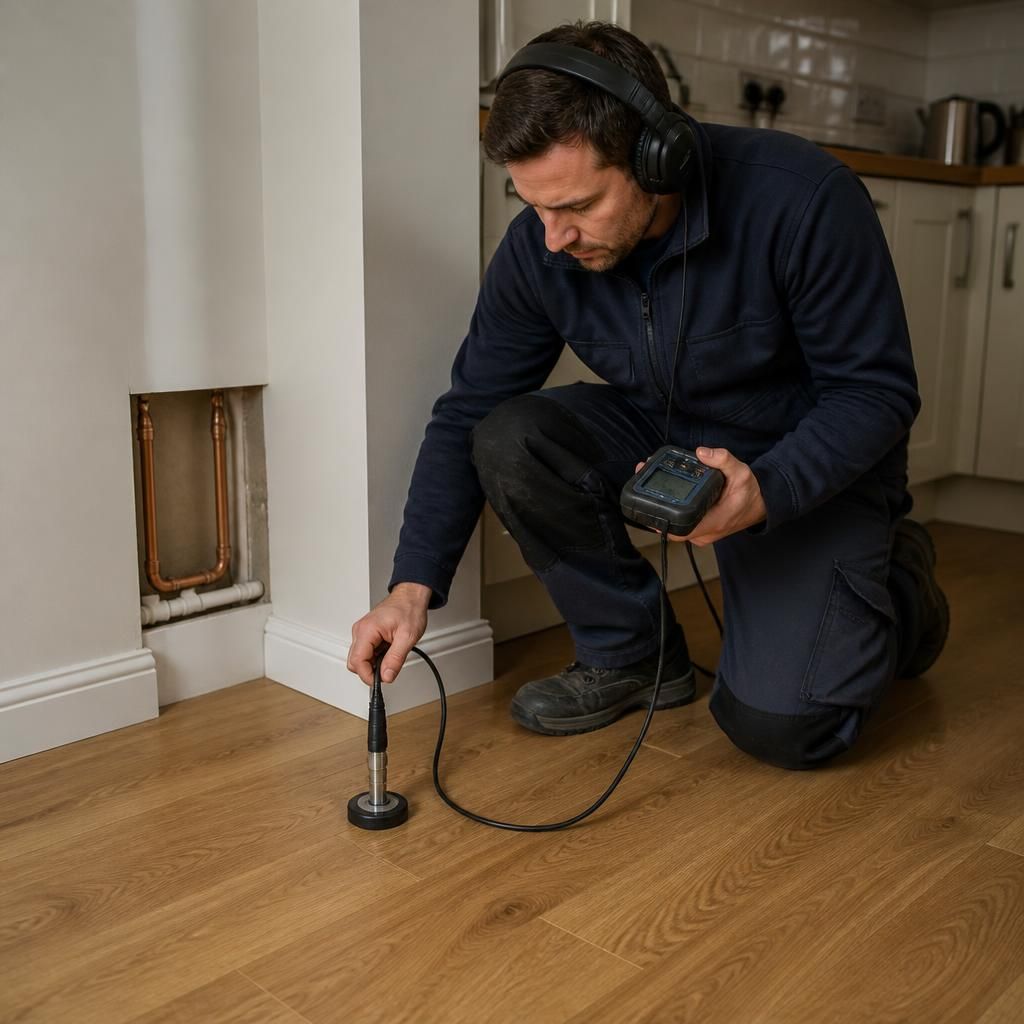
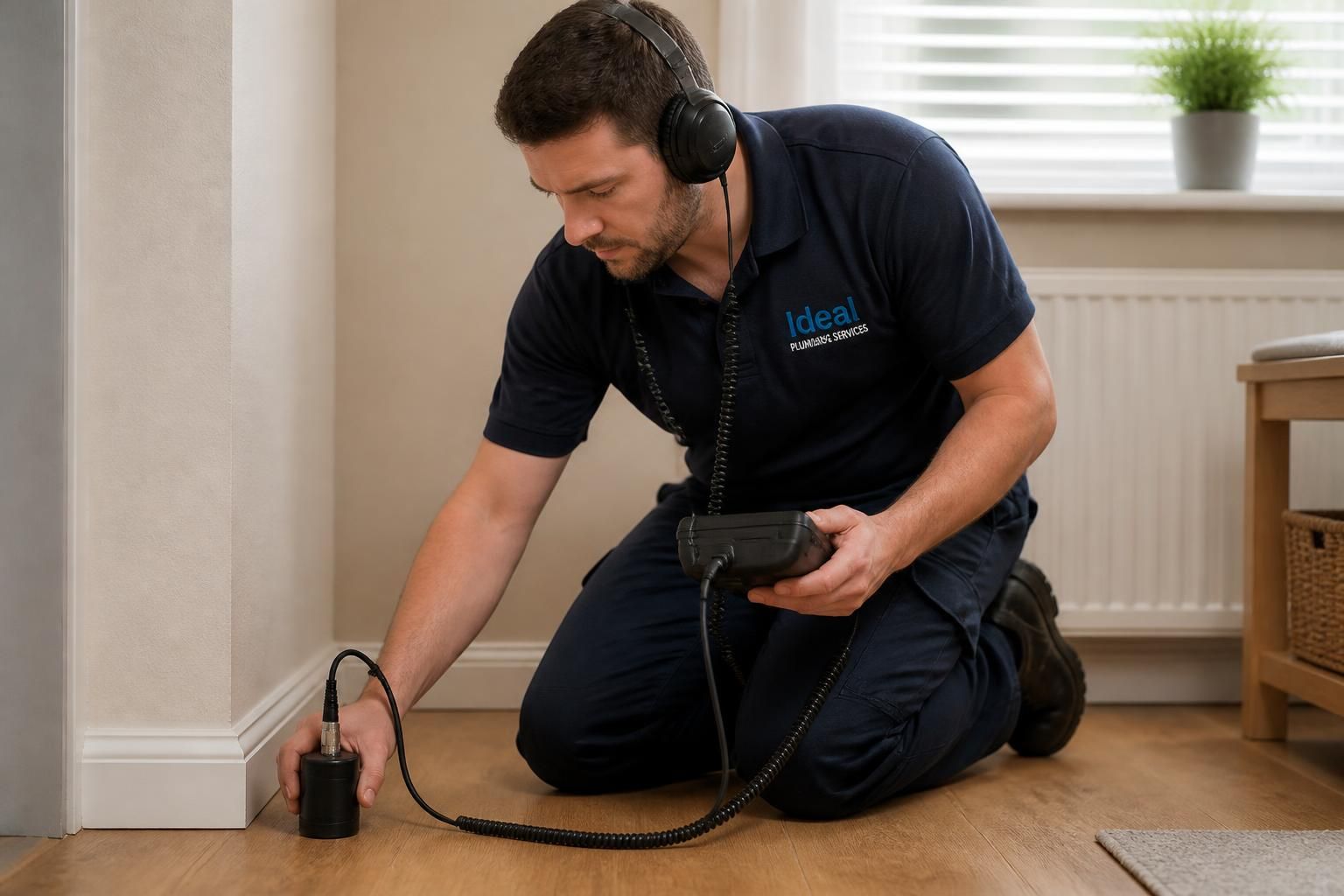
- Detection method: The appropriate method depends on the type of pipework, the building layout and the symptoms present. Investigations may involve visual checks, moisture readings, acoustic equipment, thermal imaging or other specialist techniques.
- Extent of the investigation: A single suspected area may be relatively simple to assess, while unexplained dampness or several possible leak points can require a wider inspection.
- Additional work identified: Detection and repair are separate stages. If the investigation finds a failed joint, damaged pipe or faulty fitting, the repair itself may be priced separately.
A leak detection charge may cover the engineer’s assessment, the equipment used and the time spent tracing the water. It is important to establish whether the quoted price covers diagnosis only or also includes any minor remedial work. Larger repairs, replacement materials, floor or wall access and making good damaged finishes may not form part of the detection fee.
Some leaks are difficult to locate because water can travel along joists, behind plasterboard or beneath flooring before becoming visible. This means the damp patch is not necessarily above the failed pipe. A professional investigation aims to distinguish the point where water appears from the point where it is escaping, helping to avoid unnecessary removal of building materials.
Before authorising the work, ask for a clear explanation of:
- what is included in the detection service;
- whether equipment or investigative methods carry separate charges;
- whether any access or opening-up work is included;
- how repair costs will be handled if the source is found; and
- whether you will be told about further costs before additional work begins.
Useful information can also help make the assessment more efficient. Note when the dampness first appeared, whether it changes when taps or appliances are used, whether the water meter moves when all outlets are off and whether there has been a recent change in water pressure. Do not remove flooring or cut into walls solely to search for the leak unless advised, as this can create extra damage without identifying the source.
Ideal Plumbing Services can assess the circumstances, identify the most suitable approach and provide a clear explanation of the likely charges. This allows homeowners, landlords and tenants to compare the cost of locating the fault with the potential cost of leaving an undetected leak to cause further damage.