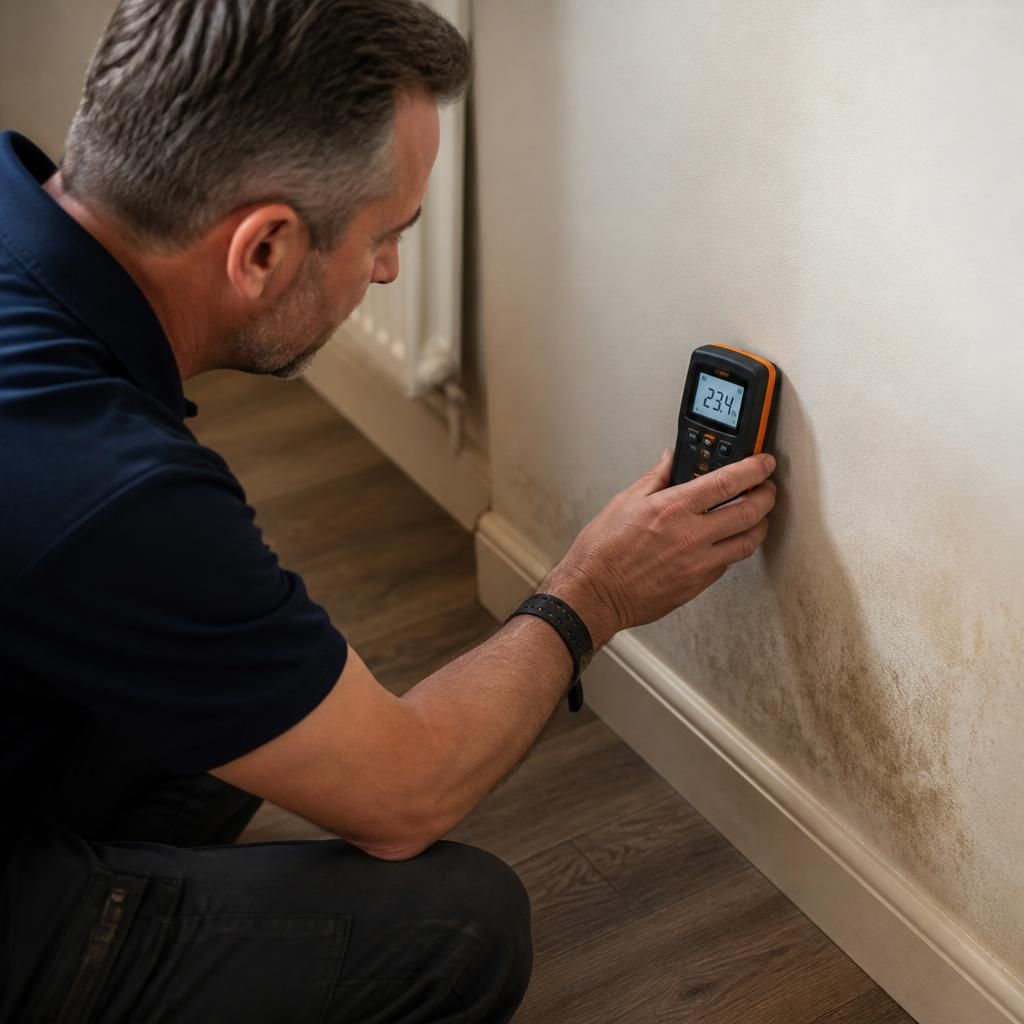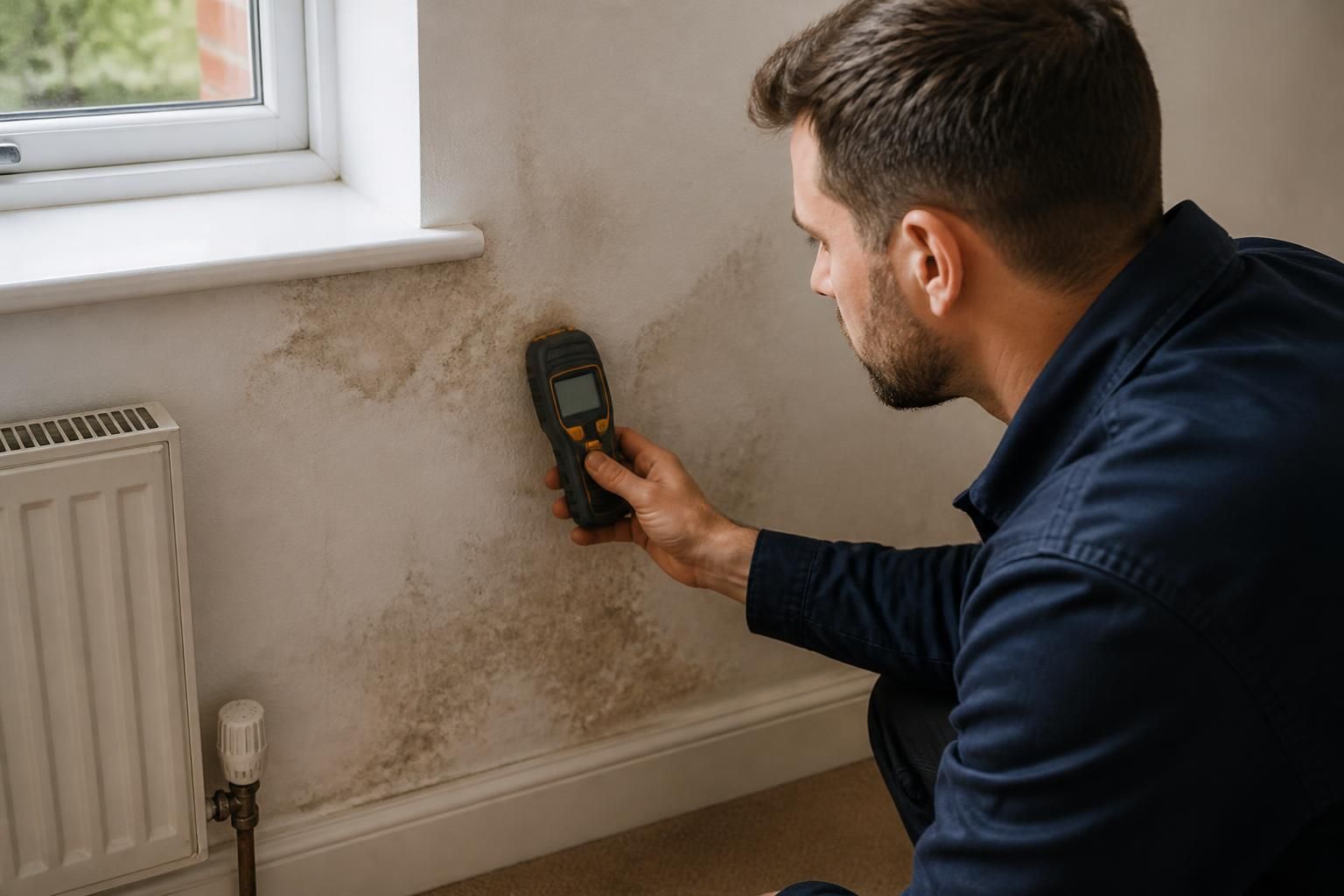
A water leak is often indicated by changes around plumbing fixtures, building materials or heating equipment rather than by a visible flow of water. Less obvious warning signs include recurring moisture inside cupboards, loose tiles, deteriorating sealant, unexplained warmth under a floor and a toilet cistern that refills without being used.
Check the areas where water pipes and fittings are concentrated, including:
- Under-sink deterioration: swollen cabinet panels, softened chipboard, rusty hinges or damaged stored items can indicate a slow leak from a trap, valve or flexible connector.
- Changes around toilets and baths: loose floor tiles, failing grout, movement around the base of a toilet or sealant that repeatedly separates may point to water escaping beneath the fitting.
- Crystalline deposits: white, powdery marks on masonry, pipe joints or plaster can form when water repeatedly evaporates and leaves minerals behind.
- Unexplained warmth: a warm area on a floor or wall can be associated with a leaking hot-water or central-heating pipe, particularly when the surface temperature differs from the surrounding area.
- Toilet cistern cycling: if a cistern periodically refills when nobody has flushed it, water may be passing through the flush valve or overflow internally.
- Damaged sealant and grout: darkening, softening or repeated failure around a shower, bath or basin can indicate water getting behind the surface rather than draining correctly.
- Changes inside service cupboards: corrosion on valves, damp insulation, swollen shelving or a persistent sheen on pipework should be investigated rather than simply wiped away.
Some apparent leak signs have other causes. Condensation can form on cold pipes and windows, while failed bathroom sealant may allow splash water to escape without a pressurised pipe leaking. A heating fault can also cause a change in boiler pressure without there being a domestic water leak. Comparing the location, timing and recurrence of the problem helps distinguish these issues, but concealed leaks can require specialist testing to confirm.
Before checking, dry the area and place a piece of tissue or kitchen roll beneath accessible joints. This can reveal a small amount of moisture that is not easy to see. Avoid dismantling built-in units, lifting flooring or opening walls, as this can spread damage and make the source harder to identify. If water is near electrical equipment, avoid contact with the area and arrange appropriate professional assistance.
A leak should be investigated when the same area repeatedly becomes wet, a fitting continues to refill or deteriorate, or damage appears away from the nearest visible pipe. Ideal Plumbing Services can assess suspected domestic leaks in Birmingham and the wider West Midlands, using the observed symptoms to help identify whether the source is an exposed fitting, concealed pipework, a toilet component or a heating system connection.