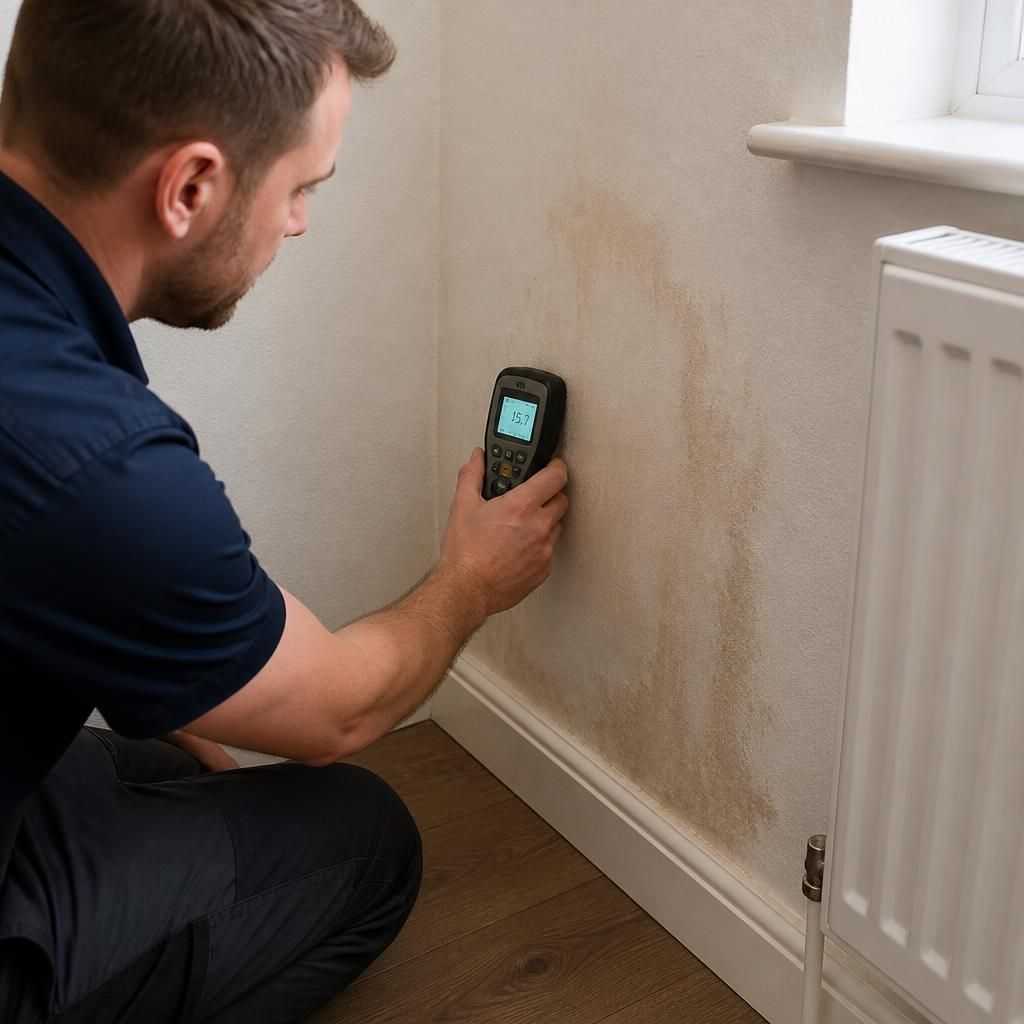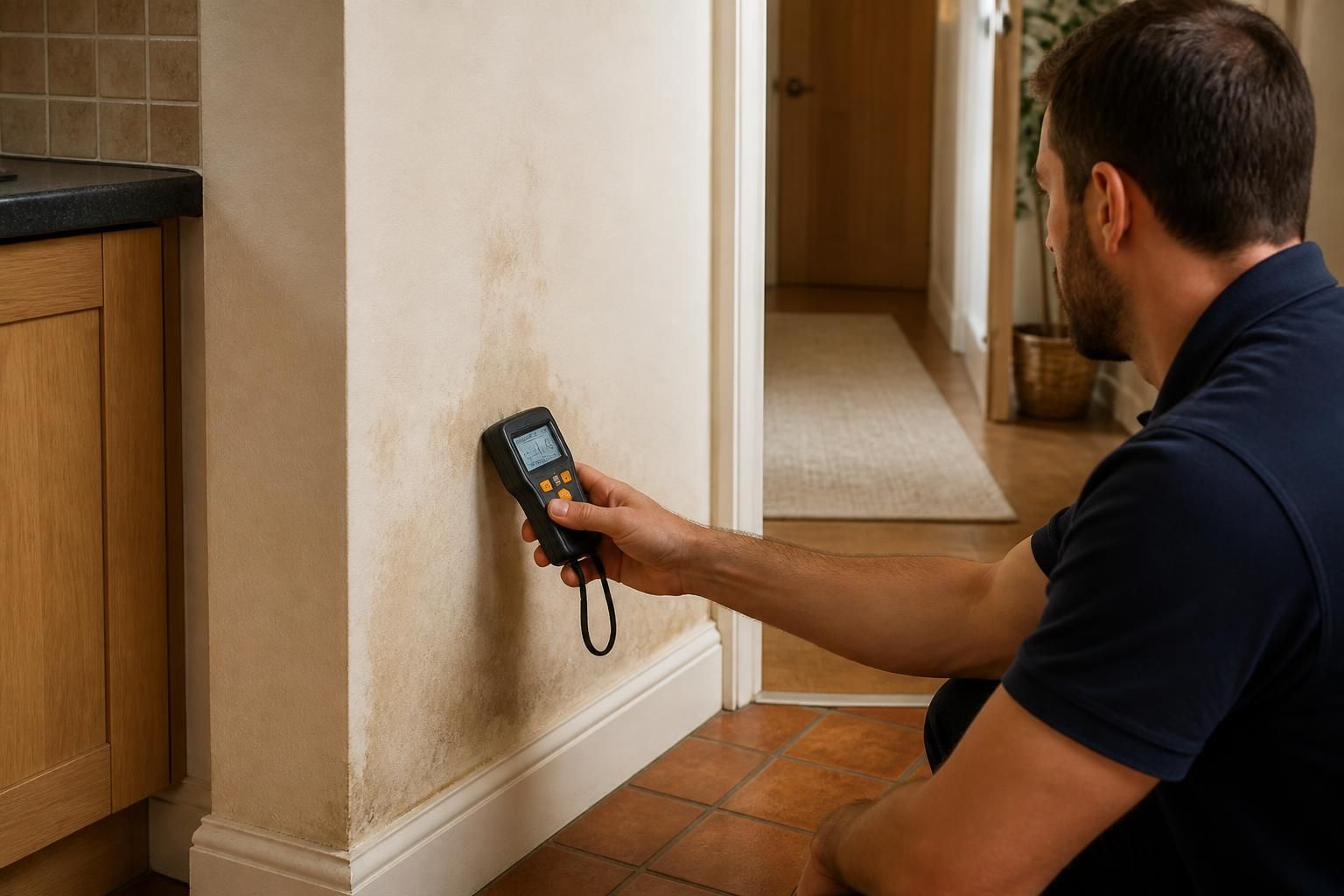
Domestic water leak detection is most suitable for people who need to establish whether a hidden or difficult-to-trace leak is affecting a residential property. It is particularly relevant where the visible evidence does not show exactly where water is entering, escaping or travelling through the building.
Homeowners may benefit from leak detection when they notice a developing problem but cannot safely access the pipework responsible. This can apply to leaks beneath floors, inside walls, around bathrooms and kitchens, or within heating and water supply systems. Identifying the source can help distinguish a plumbing fault from condensation, a roof issue or another cause of damp before repair work is planned.
Landlords can use detection services when a tenant reports staining, damaged finishes, unusual plumbing behaviour or recurring moisture. It can provide useful information about the location and likely cause of a fault, helping the landlord decide what repairs are needed and whether further investigation of connected pipework is appropriate. It may also be useful when a property has been vacant and its condition needs checking before a new tenancy.
Tenants should consider requesting professional assistance when a suspected leak is not resolved by a straightforward repair or when the source appears to be within the building fabric. Tenants should report the issue to their landlord or managing agent, particularly where access to fixed plumbing, flooring or walls is required. Leak detection is not normally a substitute for permission to carry out intrusive work.
The service is also suitable for households dealing with:
- Water marks that return after surfaces have dried
- Flooring, plaster or joinery that is becoming damaged without an obvious spill
- A leak that appears only when a tap, shower, toilet or appliance is used
- Moisture in a location separated from the pipe or fitting causing it
- Suspected leaks beneath concrete floors, tiled areas or fitted units
- A previous plumbing repair where dampness or damage continues
Leak detection is especially helpful when a visible inspection cannot identify the fault without removing finishes. Depending on the circumstances, a plumber may assess the plumbing layout, inspect accessible fittings and use specialist detection methods to narrow down the source. The appropriate approach depends on the construction of the property, the type of pipework and the symptoms being investigated.
It may not be necessary where the faulty fitting is clearly visible and can be isolated without further investigation. For example, a loose connection under a sink may be straightforward to inspect directly. However, if water has travelled away from that fitting, if more than one source is possible, or if the problem returns after an apparent repair, professional detection can provide a more reliable basis for deciding what to do next.
Domestic water leak detection can therefore suit anyone responsible for a home who needs more certainty before arranging repairs. Ideal Plumbing Services provides specialist assistance for residential leak investigations, with findings used to inform the next stage rather than assuming that the most visible sign is the actual source.