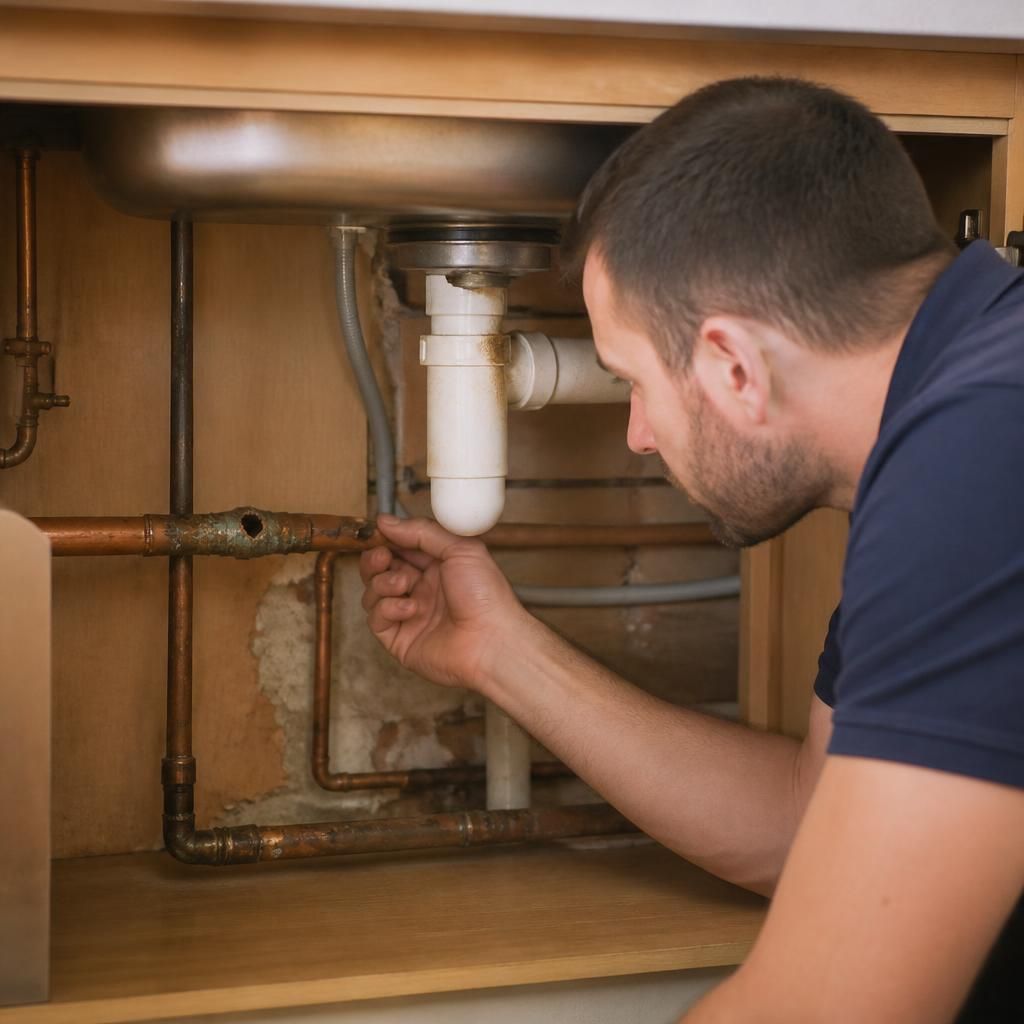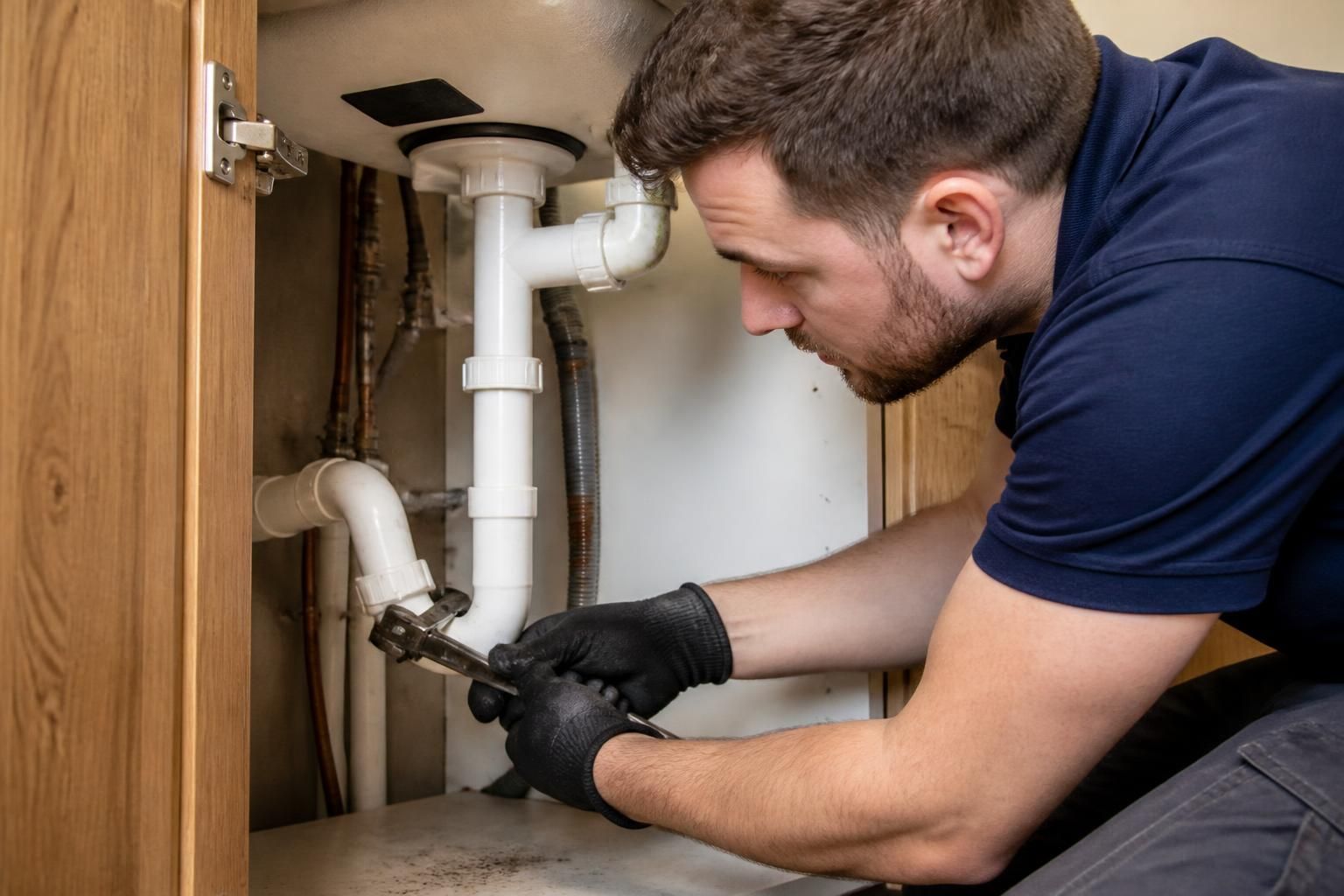
A leak does not automatically require a complete pipework replacement. A local repair is generally suitable when the surrounding pipe remains structurally sound, the fault can be accessed safely and there is no wider pattern of deterioration. Full or partial renewal becomes more appropriate where the pipe is extensively corroded, repeatedly failing or incompatible with the existing system.
What determines the repair approach?
- Pipe condition: A clean, stable pipe with one identifiable fault may be suitable for a joint, section or fitting repair. Flaking, heavily corroded, distorted or weakened pipework indicates that further failures may occur if only the visible defect is addressed.
- Leak position: A leak at an accessible joint, valve or exposed run is usually easier to repair locally. Pipework beneath floors, inside walls or below fitted units may require carefully planned access, but its concealed position does not by itself mean that every pipe must be removed.
- Pipe material and compatibility: The replacement part and connection method must be appropriate for the existing installation. Different materials require suitable fittings and correct preparation to create a dependable connection.
- Cause of the failure: Movement, freezing, excessive pressure, poor installation, corrosion and accidental damage can all produce leaks. Treating the underlying cause is important; otherwise a new repair may be placed under the same stress.
- Number and pattern of faults: One isolated defect is different from several leaks across the same run. Multiple failures, discoloured water, persistent dampness or a history of repairs can suggest that broader renewal should be considered.
How a plumber decides what to replace
The assessment should begin by locating the source rather than assuming that the wettest area is the point of failure. Water can travel along joists, insulation, plaster or boxing before it becomes visible. A professional inspection considers visible pipework, accessible connections, moisture around the suspected route and the condition of nearby components. Where the source is concealed, suitable leak detection methods can help narrow the affected area before unnecessary opening-up takes place.
Once the fault is identified, the repair can be planned around the sound sections of the installation. This may involve removing a failed fitting, renewing a short length, replacing a valve or correcting a poorly formed connection. The system should then be checked for further leakage and appropriate operation. Any access created in a wall, floor or cupboard should also be discussed, including what making-good work may be needed afterwards.
When more extensive replacement may be sensible
Replacing only the first failed point may not be the most reliable option if the surrounding pipe has widespread corrosion, repeated pinhole leaks or evidence of internal degradation. It may also be impractical where the pipe run contains numerous inaccessible joints or where previous alterations have left a complicated, unsuitable arrangement. In these circumstances, replacing a complete accessible run can reduce the number of vulnerable connections and make future maintenance easier.
A wider replacement should still be based on inspection rather than assumption. Pipework that is old is not necessarily defective throughout, and replacing sound sections can add disruption without addressing a specific risk. Conversely, concealing a deteriorating pipe after a small patch repair can make a later failure more disruptive. The appropriate scope should therefore balance the condition of the installation, access requirements, the likely cause of failure and the consequences of another leak.
What to do after a leak is found
- Limit water damage by dealing with the supply safely and moving vulnerable belongings away from the affected area where possible.
- Record where water, staining or dampness first appeared, as this can help distinguish the symptom from the source.
- Do not permanently cover damp surfaces before the leak has been repaired and the area has had time to dry.
- Ask for the proposed repair to be explained, including which section is affected, why that section is sufficient and whether nearby pipework shows signs of deterioration.
- Check whether the repair includes testing and whether any separate building or redecoration work is required after access is made.
For homeowners, a local repair can preserve sound pipework and reduce unnecessary alteration. Landlords and tenants should document the location and visible effects of the leak and agree access for inspection, while keeping responsibility for plumbing repairs clear between the parties. An experienced Birmingham plumber can assess the specific installation and advise whether a contained repair, renewal of a larger run or further investigation is the most appropriate course for a property in Birmingham or the wider West Midlands.