In a rented home or flat, water leak detection and repair involves locating the source of escaping water, assessing the cause and completing an appropriate repair while taking account of the landlord’s responsibilities, the tenant’s access rights and the structure of the building. The key difference from owner-occupied work is usually the need to coordinate permissions, communication and any effect on neighbouring or communal areas.
Leak detection is particularly useful where the visible damage does not identify the true source. Water may travel through floors, walls, ceilings or service ducts before appearing as a stain, damp patch, mould growth or dripping fitting. A plumber can investigate the likely route and distinguish between problems such as:
- A leaking supply pipe, waste pipe or central-heating pipe.
- A failed tap, toilet connection, shower seal or appliance connection.
- Water entering from a flat above, an adjoining property or a shared service.
- Penetrating damp or condensation, which may require a different remedy from a plumbing leak.
Finding this distinction matters in flats because the source may be outside the room where the damage is visible. It may also be within a ceiling void, riser, service cupboard or another flat. Where shared or inaccessible areas are involved, the investigation may need to be coordinated with the landlord, managing agent, freeholder or another occupier.
Landlord and tenant responsibilities
Responsibility depends on the cause of the fault and the terms of the tenancy. Landlords will generally need to deal with plumbing installations that form part of the property, while tenants are normally expected to report problems promptly and avoid causing preventable damage. A tenant should not assume that a repair is their responsibility simply because the water is inside their home, particularly where the leak comes from a concealed pipe, an upper-floor property or a communal installation.
Tenants should notify the landlord or managing agent as soon as they notice signs such as a new damp mark, unexplained loss of water pressure, a continuously running toilet, wet flooring or water near electrical fittings. The report should include the location, when it was first noticed, whether the damage is spreading and whether the suspected source can be safely reached. Photographs can help document the condition before and after an inspection.
Landlords and agents should provide clear access arrangements and relevant information about the property. Useful details include previous repairs, the location of stop taps, known shared pipework and whether another flat may be affected. If the tenant cannot provide access, the appointment may need to be rearranged through the person responsible for managing the property.
What happens during an inspection
- The visible symptoms and affected areas are assessed.
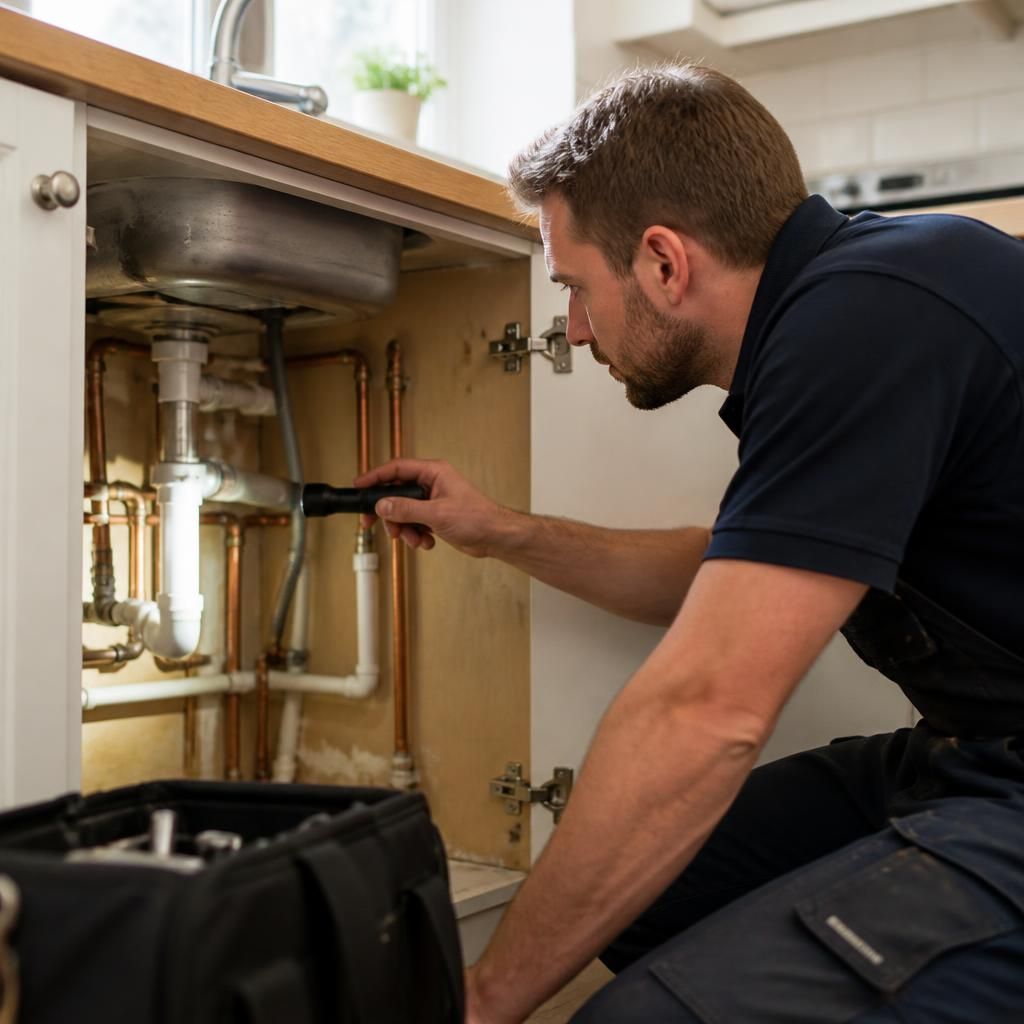
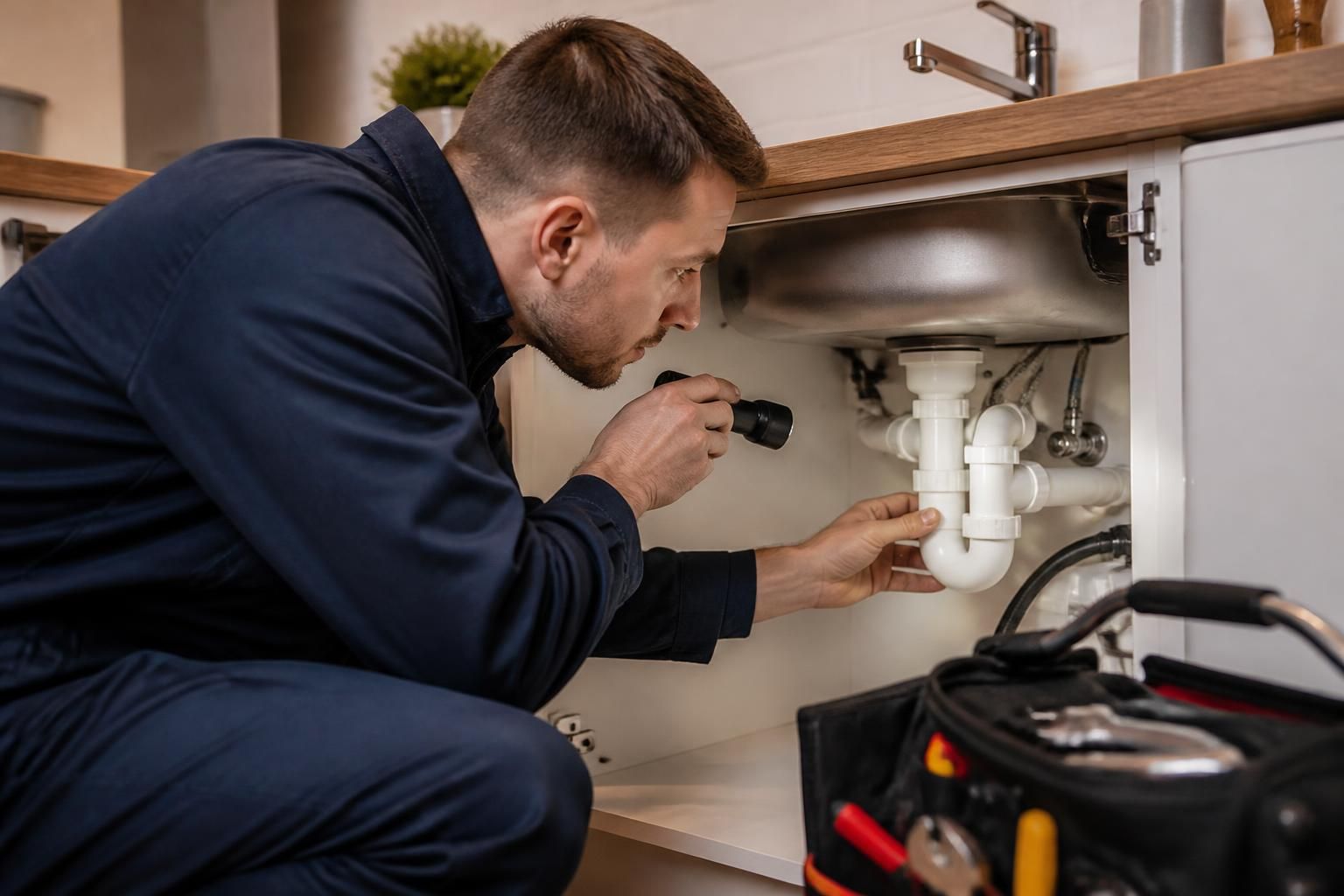
- Accessible fittings, pipework and appliances are checked for signs of active leakage.
- The likely route of the water is considered rather than relying only on the location of staining.
- Where appropriate, specialist detection methods may be used to narrow down a concealed leak.
- The findings are explained, including whether the source appears to be within the property or connected to another dwelling or shared system.
- A repair approach is recommended based on the cause, access and condition of the affected components.
The inspection does not automatically mean that walls, floors or ceilings must be opened extensively. The appropriate method depends on the type of pipework, the certainty of the suspected location and whether the damaged section can be reached through an existing access point. If materials have already been affected, drying, cleaning or additional building work may be separate from the plumbing repair and may need to be arranged with the landlord or insurer.
For flats, it is important to establish whether the issue is inside the individual property or part of a communal system. A leak from a flat above, a shared riser or a roof installation may involve more than one responsible party. Recording the findings in writing can help the tenant, landlord and managing agent decide who should arrange subsequent work and whether an insurance claim should be considered.
Ideal Plumbing Services provides water leak detection and repair for rented homes and flats in Birmingham and the wider West Midlands. Landlords, tenants and agents can use the inspection findings to make a more informed decision about the necessary repair, access arrangements and any further property work.