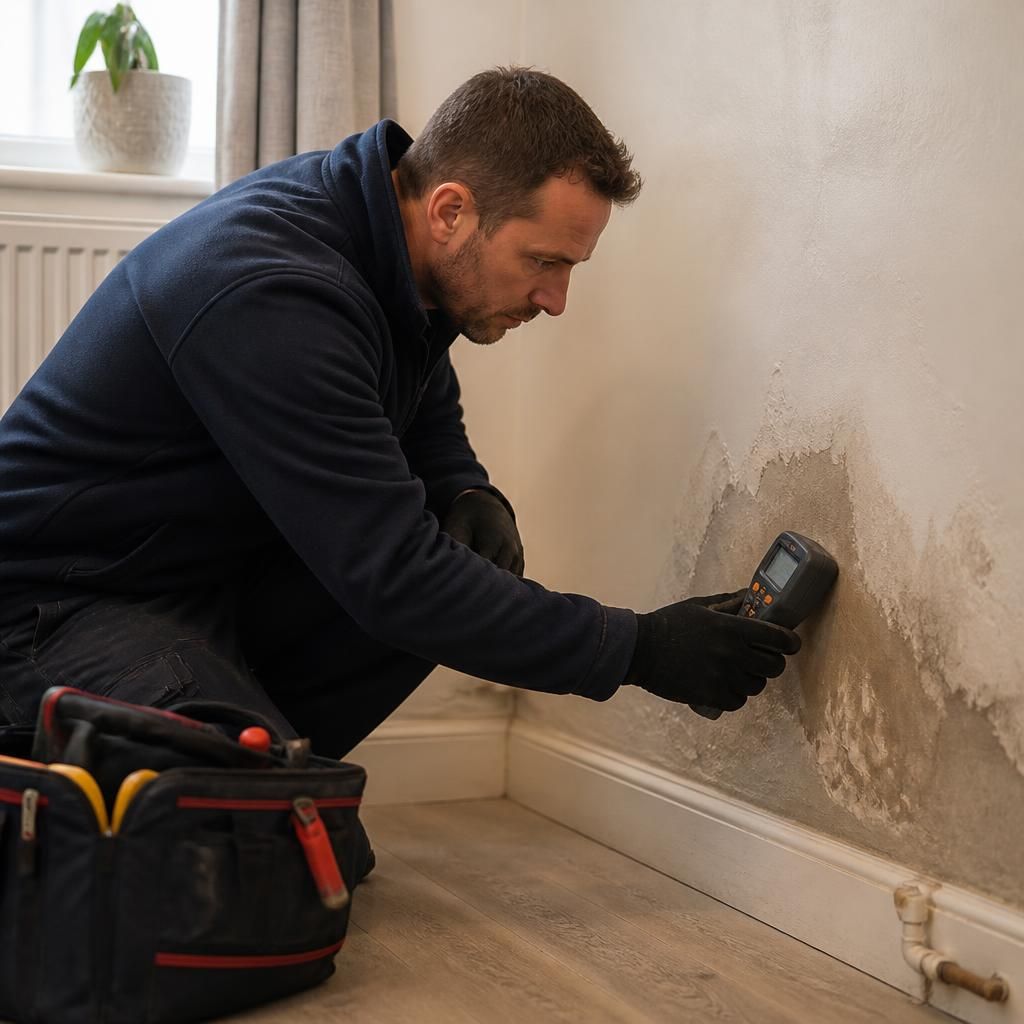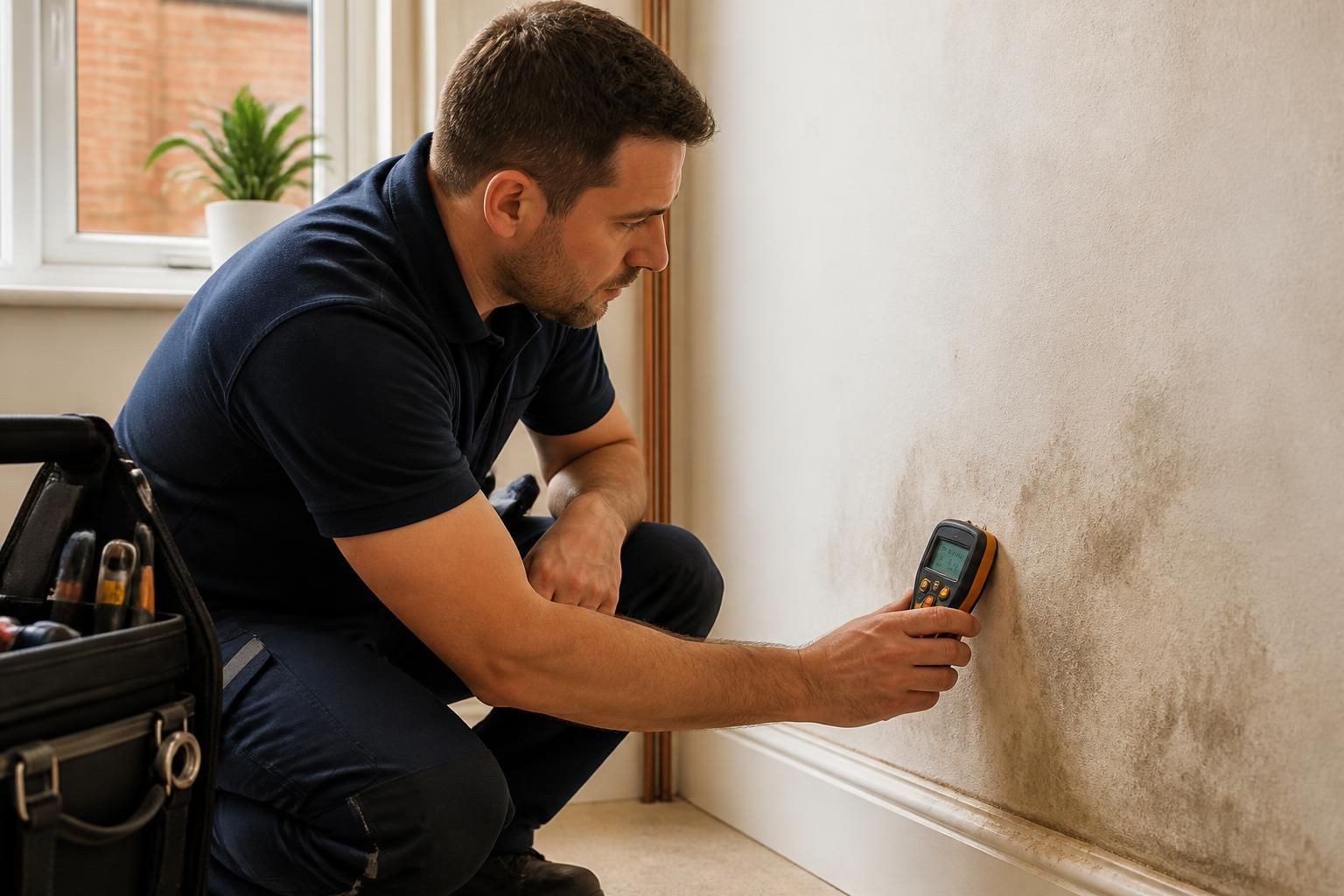
Leak detection itself should cause limited disruption; the level of disturbance usually depends on where the leak is located and whether the pipework is accessible. The investigation is separate from the repair, so identifying the source does not automatically mean that walls, floors or fitted units will need to be removed.
A typical assessment begins with a review of the symptoms, such as unexplained damp, staining, reduced water pressure, a persistently moving water meter or a heating system losing pressure. The visible pipework, valves, sanitaryware and appliances can then be checked before more focused testing is carried out. This helps distinguish a supply-pipe leak from a fault affecting a tap, toilet, radiator, boiler connection or appliance.
Depending on the suspected location, a plumber may use moisture readings, acoustic equipment, thermal imaging, pressure checks or other tracing methods. These techniques can help narrow down the source without opening up large areas unnecessarily. They do not always identify the exact point immediately, particularly where water has travelled along joists, behind a wall or beneath flooring from the original failure point.
Some temporary disruption may still be necessary. You may need to provide clear access to:
- the stop tap, water meter and accessible isolation valves;
- cupboards beneath sinks and basins;
- boilers, radiators, washing machines and dishwashers;
- loft spaces, service hatches or utility areas; and
- sections of flooring or wall where damp readings indicate concealed pipework.
Moving stored items or removing a small amount of easily lifted flooring may make the inspection more straightforward. Where a concealed leak cannot be confirmed using external testing, a limited opening may be recommended. The purpose should be to gain enough access to confirm the pipe route and source, rather than remove finishes without evidence.
The main factors affecting disruption are the construction of the property, the depth and position of the pipework, the extent of water spread and whether fittings or finishes obstruct access. A leak beneath a kitchen unit may require different access from one below a solid floor or inside a plasterboard partition. Older properties and altered plumbing layouts can also make pipe routes less predictable.
Detection and reinstatement are separate parts of the work. Once the source is located, you should be able to discuss the repair method before any cutting or removal takes place. Options may include replacing a local section of pipe, renewing a failed connection or accessing a fitting through an existing panel. If water has affected plaster, flooring, insulation or cabinetry, those materials may need drying, cleaning or replacement after the plumbing fault has been resolved.
To help keep the visit orderly, clear the area around likely access points, note when the symptoms occur and identify any recent plumbing or building work. If water is close to electrical equipment, avoid touching the equipment or entering standing water; isolate the affected supply only if it is safe to do so and seek appropriate professional advice.
For Birmingham homeowners, landlords and tenants, Ideal Plumbing Services can assess suspected leaks and explain the likely access requirements before repair work proceeds. A clear diagnosis helps prevent unnecessary disturbance and provides a more informed basis for deciding how the plumbing should be repaired.