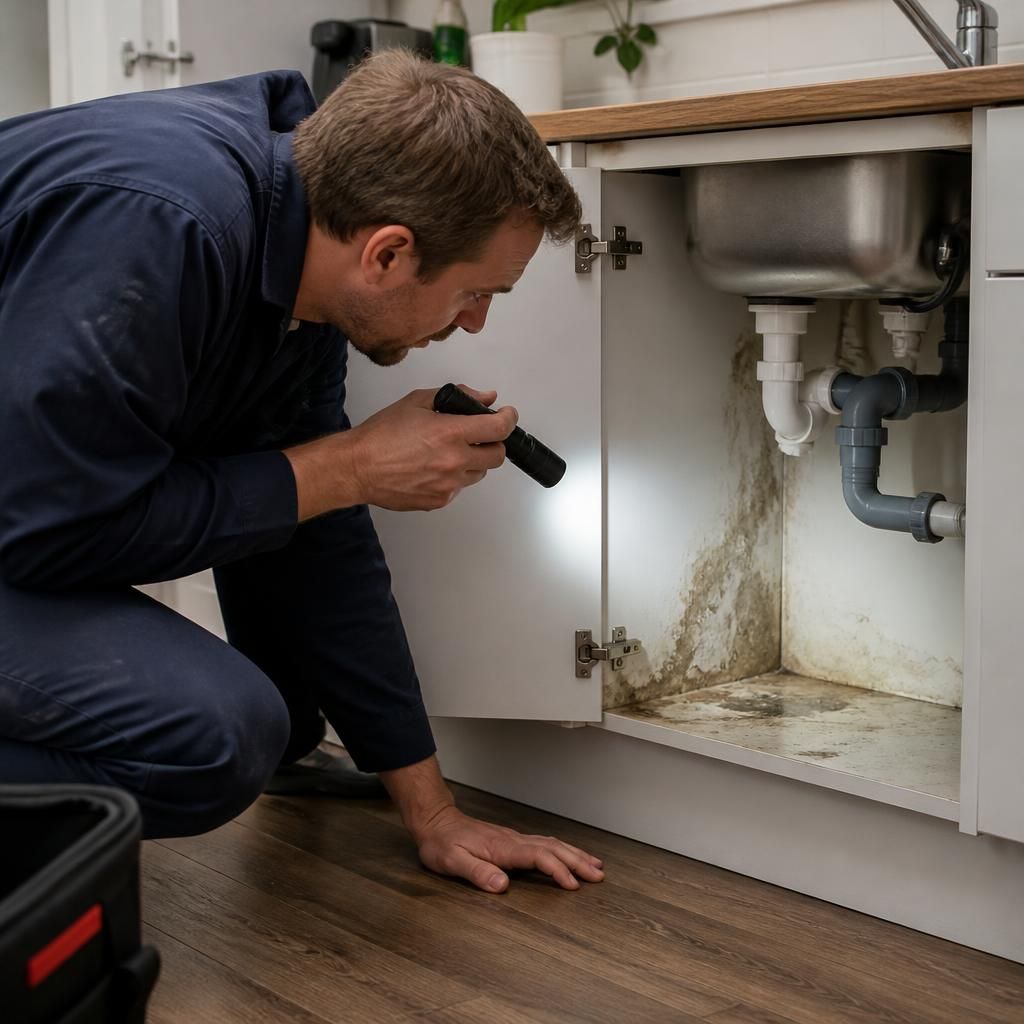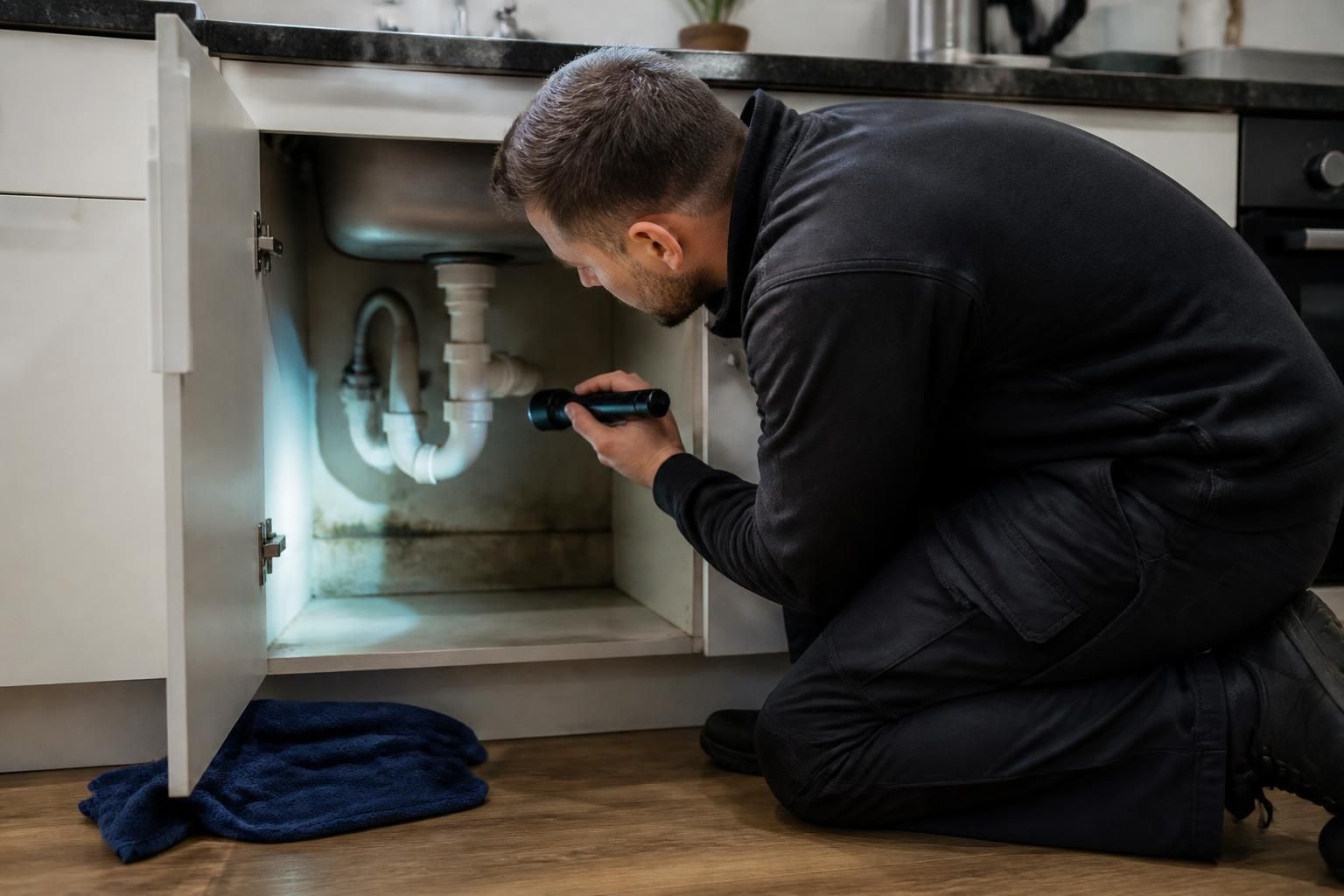
The most useful additional information is the property type, plumbing system, recent work, meter or pressure changes, and any previous repair history. These details help a plumber assess whether the suspected leak is likely to involve internal pipework, a heating system, an appliance connection, drainage or a shared installation before carrying out further investigation.
Describe the property and its plumbing arrangement. State whether it is a house, flat, maisonette or another type of home, and identify whether the suspected pipework serves only your property or may be part of a shared system. For flats and rented homes, provide the landlord, managing agent or building management contact details where relevant, as responsibility for communal pipework may differ from responsibility for fixtures inside the property.
Explain what is known about the installation. Tell the plumber whether the property has a combi boiler, hot-water cylinder, cold-water storage tank, underfloor heating or other relevant equipment. If you know the approximate age of the pipework or whether it is made from copper, plastic or another material, include that information. It is also useful to mention any recent bathroom, kitchen, heating or plumbing alterations, even if the work was carried out in a different area.
Provide evidence of changes in water use. If the property has a water meter, note whether it continues to register consumption when all taps and water-using appliances are off. Unusual changes in water pressure, boiler pressure or the frequency with which a heating system needs topping up can also help distinguish a leak on a supply, heating or sealed system. Do not dismantle equipment or remove panels simply to obtain this information.
Share relevant records. Previous inspection reports, plumbing invoices, appliance installation details, maintenance records and building plans may identify concealed pipe routes or recurring faults. If an earlier repair was made in the same area, say what was repaired and whether the issue returned. This can prevent a new investigation from overlooking an underlying defect.
Flag safety, insurance and ownership considerations. Tell the plumber if water may have reached electrical equipment, if the property is being prepared for an insurance claim, or if an insurer, landlord or managing agent has requested specific documentation. Do not handle wet electrical fittings or enter an unsafe area to gather further information. Safety concerns should be explained before any inspection begins.
Keep the description factual. Separate what you have directly observed from what you suspect. For example, say that a meter appears to move with no water being used rather than stating that a buried supply pipe has definitely failed. Accurate observations allow the plumber to select an appropriate detection method and decide whether a repair, further testing or another type of inspection is needed.
Ideal Plumbing Services can use this information when assessing suspected leaks for homeowners, landlords and tenants in Birmingham and the wider West Midlands. Clear details do not replace professional testing, but they can make the initial assessment more targeted and help identify the right next step.